NEPOLEON ,THE EMPEROR OF FRANCE
BORN ON 15 AUGUST 1769

Synopsis
Military general and first emperor of France, Napoleon Bonaparte was born on August 15, 1769, in Ajaccio, Corsica, France.
 |
| NEPOLEON AT AGE 4 |
 |
| NEPOLEON AT AGE 8 |
 |
| NEPOLEON AT AGE 19 |
One of the most celebrated leaders in the history of the West, he revolutionized military organization and training, sponsored Napoleonic Code, reorganized education and established the long-lived Concordat with the papacy. He died on May 5, 1821, on the island of St. Helena in the South Atlantic Ocean.
Early Years
Considered one of the world's greatest military leaders, Napoleon Bonaparte was born on August 15, 1769, in Ajaccio, Corsica, France. He was the fourth, and second surviving, child of Carlo Buonaparte, a lawyer, and his wife, Letizia Ramolino.
By the time around Napoleon's birth, Corsica's occupation by the French had drawn considerable local resistance. Carlo Buonaparte had at first supported the nationalists siding with their leader, Pasquale Paoli. But after Paoli was forced to flee the island, Carlo switched his allegiance to the French. After doing so he was appointed assessor of the judicial district of Ajaccio in 1771, a plush job that eventually enabled him to enroll his two sons, Joseph and Napoleon, in France's College d'Autun.
 |
| NEPOLEON AT MILITARY COLLEGE |
Eventually, Napoleon ended up at the military college of Brienne, where he studied for five years, before moving on to the military academy in Paris.
In 1785, while Napoleon was at the academy, his father died of stomach cancer. This propelled Napoleon to take the reins as the head of the family.
Graduating early from the military academy, Napoleon, now second lieutenant of artillery, returned to Corsica in 1786.

Back home Napoleon got behind the Corsican resistance to the French occupation, siding with his father's former ally, Pasquale Paoli. But the two soon had a falling-out, and when a civil war in Corsica began in April 1793, Napoleon, now an enemy of Paoli, and his family relocated to France, where they assumed the French version of their name: Bonaparte.
Rise to Power
For Napoleon, the return to France meant a return to service with the French military. Upon rejoining his regiment at Nice in June 1793, the young leader quickly showed his support for the Jacobins, a far-left political movement and the most well-known and popular political club from the French Revolution.
 |
| FRENCH REVOLUTION -BASTILE ATTACK |
 |
| EXECUTION OF LOUIS XVI |
 |
| EXECUTION OF MARIA ANTONOITE |
It had certainly been a tumultuous few years for France and its citizens. The country was declared a republic in 1792, three years after the Revolution had begun, and the following year King Louis XVI was executed.
Ultimately, these acts led to the rise of Maximilien de Robespierre and what became, essentially, the dictatorship of the Committee of Public Safety. The years of 1793 and 1794 came to be known as the Reign of Terror, in which many as 40,000 people were killed.
Eventually the Jacobins fell from power and Robespierre was executed. In 1795 the Directory took control of the country, a power it would it assume until 1799.
All of this turmoil created opportunities for ambitious military leaders like Napoleon. After falling out of favor with Robespierre, he came into the good graces of the Directory in 1795 after he saved the government from counter-revolutionary forces.


For his efforts, Napoleon was soon named commander of the Army of the Interior. In addition he was a trusted advisor to the Directory on military matters.
In 1796, Napoleon took the helm of the Army of Italy, a post he'd been coveting. The army, just 30,000 strong, disgruntled and underfed, was soon turned around by the young military commander.
Under his direction the rebuilt army won numerous crucial victories against the Austrians, greatly expanded the French empire and helped make Napoleon the military's brightest star.
Marriage
His national profile was enhanced by his marriage to


Joséphine de Beauharnais,
widow of General Alexandre de Beauharnais (guillotined during the Reign of Terror) and the mother of two children.
The two were married in a civil ceremony on March 9, 1796.
After squashing an internal threat by the royalists, who wished to return France to a monarchy, Napoleon was on the move again, this time to the Middle East to undermine Great Britain's empire by occupying Egypt and disrupting English trade routes to India.
FIRST DEFEAT
But his military campaign proved disastrous.
On August 1, 1798, Admiral Horatio Nelson's fleet decimated his forces in the Battle of the Nile. Napoleon's image was greatly harmed by the loss, and in a show of newfound confidence against the commander, Britain, Austria, Russia and Turkey formed a new coalition against France. In the spring of 1799, French armies were defeated in Italy, forcing France to give up much of the peninsula.


Inside France itself, unrest continued to ensue, and in June of 1799 a coup resulted in the Jacobins taking control of the Directory. In October, Napoleon returned to France.
Working with one of the new directors, Emmanuel Sieyes, he hatched plans for a second coup that would place the two men, and another, Pierre-Roger Ducos, atop a new government, called the Consulate.
First Consul
Napoleon's great political skills soon led to a new constitution that created the position of first consul, which amounted to nothing less than a dictatorship.

Under the new guidelines the first consul was permitted to appoint ministers, generals, civil servants, magistrates and even members of the legislative assemblies. Napoleon would of course be the one who would fulfill the first consul's duties, and in February 1800 the new constitution was easily accepted.
Under his direction Napoleon turned his reforms to other areas of the country, including its economy, legal system and education, and even the Church, as he reinstated Roman Catholicism as the state religion.

He also instituted the Napoleonic Code, which forbade privileges based on birth, allowed freedom of religion and stated that government jobs must be given to the most qualified. Internationally, he negotiated a European peace.
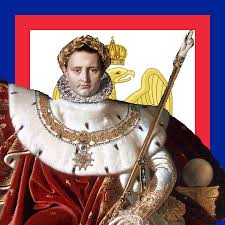
Napoleon's reforms proved popular. In 1802 he was elected consul for life, and two years later he was proclaimed emperor of France.
More Wars
Napoleon's negotiated peace with Europe lasted just three years. In 1803 France again returned to war with Britain, and then with Russia and Austria. The British registered an important naval victory against Napoleon in 1805 at Trafalgar, which led Napoleon to scrap his plans to invade England. Instead he set his sights on Austria and Russia, and beat back both militaries in Austerlitz.


Other victories soon followed, allowing Napoleon to greatly expand the French empire, paving the way for loyalists to his government to be installed in Holland, Italy, Naples, Sweden, Spain and Westphalia.
Changes in Napoleon's personal life.
In 1810 he arranged for the annulment of his marriage to Joséphine, who was unable to give him a son, so that he could marry Marie-Louise, the 18-year-old daughter of the emperor of Austria.


The couple had a son, Napoleon II (a.k.a. the King of Rome)
on March 20, 1811.
Napoleon's military success, however, soon gave way to broader defeats, beginning in 1810, when France suffered a string of losses that tapped the country's military budget.
invasion of Russia
In 1812 France was devastated when its invasion of Russia turned out to be a colossal failure in which scores of soldiers in Napoleon's Grand Army were killed or badly wounded. Out of an original fighting force of some 600,000 men, just 10,000 soldiers were still fit for battle.


News of the defeat reinvigorated Napoleon's enemies, both inside and outside of France. A failed coup was attempted while Napoleon led his charge against Russia, while the British began to advance through French territories.


Return to Power
Napoleon's exile did not last long. He watched as France stumbled forward without him.
In March 1815 he escaped the island and quickly made his way to Paris, where he triumphantly returned to power. But the enthusiasm that greeted Napoleon when he resumed control of the government soon gave way to old frustrations and fears about his leadership.
Napoleon immediately led his country back into battle. He led troops into Belgium and defeated the Prussians on June 16, 1815.


But then, two days later, at Waterloo, he was defeated in a raging battle against British, who were reinforced by Prussian fighters. Napoleon once again suffered a humiliating loss.
Later Years
On June 22, 1815, he abdicated his powers. In an effort to prolong his dynasty, Napoleon pushed to have his young son, Napoleon II, named emperor, but the coalition rejected the offer. Additionally, fearing a repeat of his earlier return from exile, the British government sent him to the remote island of St. Helena in the southern Atlantic.

For the most part Napoleon was free to do as he pleased at his new home. He had leisurely mornings, wrote often and read a lot. But the routine of life soon got to him, and he often shut himself indoors.

His health began to deteriorate, and by 1817 he showed the early signs of a stomach ulcer or possibly cancer.


By early 1821 he was bedridden and growing weaker by the day.
In April of that year, he dictated his last will: "I wish my ashes to rest on the banks of the Seine, in the midst of that French people which I have loved so much. I die before my time, killed by the English oligarchy and its hired assassins."

Napoleon died on May 5, 1821.


