Showing posts with label france. Show all posts

Wednesday, 17 August 2016

AMERICA`S FIRST BOMBING IN EUROPE ON 1942 AUGUST 17


AMERICA`S FIRST BOMBING IN EUROPE 
ON 1942 AUGUST 17


The USAAF began building up its air forces in Europe using B-17Es soon after entering the war. The first Eighth Air Force units arrived in High Wycombe, England, on 12 May 1942, to form the 97th Bomb Group.


On 17 August 1942, 12 B-17Es of the 97th, with the lead aircraft piloted by Major Paul Tibbets and carrying Brigadier General Ira Eaker as an observer, were escorted by RAF Spitfires on the first USAAF raid over Europe, against railroad marshalling yards at Rouen-Sotteville in France, while a further six aircraft flew a diversionary raid along the French coast. The operation was a success, with only minor damage to two aircraft.


Shortly after we turned back towards the Channel we began to get the action we had anticipated. Coming up fast out of the earth pattern below us I spied three Focke Wulf 190 fighter planes. As the first zoomed up towards our Flying Fortresses, it was not yet evident to me whether he was attacking our lead plane or our No.2 plane, directly astern of us and to starboard.
As he opened fire I realised he was aiming at No.2. his tracers seemed to burst wide of its left wing. After a few bursts at extreme range – perhaps 1000 yd. – he rolled over on his back and and went into a dive. The other two 190s attacked the rear plane of our flight. They opened fire from below; then an instant later they too pulled away at a considerable distance. I could see the bottom turret gunner of the attacked Fortress firing at them but I could not be certain that his bullets were taking effect though the tracers seemed very close.
When the last of the three 190’s broke off combat, I moved to the other side of the waist gunners’ station and observed at least a dozen puffs from exploding shells. They were deadly accurate as to altitude but several hundred yards to port. Meanwhile there was fighter activity overhead and to our rear. The RAF wing covering our withdrawal had climbed above us and passed somewhat astern as we left the target area.
Now they ran into some 35-40 enemy fighters which evidently had been reluctant to engage our Fortresses at close quarters. I can understand why. They had never seen our new B-17s before and the sight of the big guns bristling from every angle probably gave the Nazis ample reason to be wary.


There was optimism that the guns on the Flying Fortresses would be enough to deter the German fighters. As Brigadier General Ira Eaker told the press afterward

Tuesday, 16 August 2016

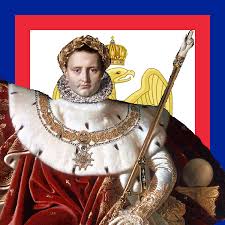
NEPOLEON ,THE EMPEROR OF FRANCE BORN ON 15 AUGUST 1769


NEPOLEON ,THE EMPEROR OF FRANCE
 BORN ON 15 AUGUST 1769


Synopsis

Military general and first emperor of France, Napoleon Bonaparte was born on August 15, 1769, in Ajaccio, Corsica, France.
NEPOLEON AT AGE 4
NEPOLEON AT AGE 8
NEPOLEON AT AGE 19


One of the most celebrated leaders in the history of the West, he revolutionized military organization and training, sponsored Napoleonic Code, reorganized education and established the long-lived Concordat with the papacy. He died on May 5, 1821, on the island of St. Helena in the South Atlantic Ocean.


Early Years

Considered one of the world's greatest military leaders, Napoleon Bonaparte was born on August 15, 1769, in Ajaccio, Corsica, France. He was the fourth, and second surviving, child of Carlo Buonaparte, a lawyer, and his wife, Letizia Ramolino.

By the time around Napoleon's birth, Corsica's occupation by the French had drawn considerable local resistance. Carlo Buonaparte had at first supported the nationalists siding with their leader, Pasquale Paoli. But after Paoli was forced to flee the island, Carlo switched his allegiance to the French. After doing so he was appointed assessor of the judicial district of Ajaccio in 1771, a plush job that eventually enabled him to enroll his two sons, Joseph and Napoleon, in France's College d'Autun.
NEPOLEON AT MILITARY COLLEGE

Eventually, Napoleon ended up at the military college of Brienne, where he studied for five years, before moving on to the military academy in Paris. 


In 1785, while Napoleon was at the academy, his father died of stomach cancer. This propelled Napoleon to take the reins as the head of the family. 

Graduating early from the military academy, Napoleon, now second lieutenant of artillery, returned to Corsica in 1786.


Back home Napoleon got behind the Corsican resistance to the French occupation, siding with his father's former ally, Pasquale Paoli. But the two soon had a falling-out, and when a civil war in Corsica began in April 1793, Napoleon, now an enemy of Paoli, and his family relocated to France, where they assumed the French version of their name: Bonaparte.


Rise to Power

For Napoleon, the return to France meant a return to service with the French military. Upon rejoining his regiment at Nice in June 1793, the young leader quickly showed his support for the Jacobins, a far-left political movement and the most well-known and popular political club from the French Revolution.
FRENCH REVOLUTION -BASTILE ATTACK

EXECUTION OF LOUIS XVI

EXECUTION OF MARIA ANTONOITE


It had certainly been a tumultuous few years for France and its citizens. The country was declared a republic in 1792, three years after the Revolution had begun, and the following year King Louis XVI was executed.

Ultimately, these acts led to the rise of Maximilien de Robespierre and what became, essentially, the dictatorship of the Committee of Public Safety. The years of 1793 and 1794 came to be known as the Reign of Terror, in which many as 40,000 people were killed. 

Eventually the Jacobins fell from power and Robespierre was executed. In 1795 the Directory took control of the country, a power it would it assume until 1799.

All of this turmoil created opportunities for ambitious military leaders like Napoleon. After falling out of favor with Robespierre, he came into the good graces of the Directory in 1795 after he saved the government from counter-revolutionary forces. 


For his efforts, Napoleon was soon named commander of the Army of the Interior. In addition he was a trusted advisor to the Directory on military matters.


In 1796, Napoleon took the helm of the Army of Italy, a post he'd been coveting. The army, just 30,000 strong, disgruntled and underfed, was soon turned around by the young military commander.

Under his direction the rebuilt army won numerous crucial victories against the Austrians, greatly expanded the French empire and helped make Napoleon the military's brightest star.

Marriage

His national profile was enhanced by his marriage to 


Joséphine de Beauharnais,
 widow of General Alexandre de Beauharnais (guillotined during the Reign of Terror) and the mother of two children.

 The two were married in a civil ceremony on March 9, 1796.


After squashing an internal threat by the royalists, who wished to return France to a monarchy, Napoleon was on the move again, this time to the Middle East to undermine Great Britain's empire by occupying Egypt and disrupting English trade routes to India.


FIRST DEFEAT

But his military campaign proved disastrous. 

On August 1, 1798, Admiral Horatio Nelson's fleet decimated his forces in the Battle of the Nile. Napoleon's image was greatly harmed by the loss, and in a show of newfound confidence against the commander, Britain, Austria, Russia and Turkey formed a new coalition against France. In the spring of 1799, French armies were defeated in Italy, forcing France to give up much of the peninsula.


Inside France itself, unrest continued to ensue, and in June of 1799 a coup resulted in the Jacobins taking control of the Directory. In October, Napoleon returned to France. 

Working with one of the new directors, Emmanuel Sieyes, he hatched plans for a second coup that would place the two men, and another, Pierre-Roger Ducos, atop a new government, called the Consulate.


First Consul

Napoleon's great political skills soon led to a new constitution that created the position of first consul, which amounted to nothing less than a dictatorship. 


Under the new guidelines the first consul was permitted to appoint ministers, generals, civil servants, magistrates and even members of the legislative assemblies. Napoleon would of course be the one who would fulfill the first consul's duties, and in February 1800 the new constitution was easily accepted.


Under his direction Napoleon turned his reforms to other areas of the country, including its economy, legal system and education, and even the Church, as he reinstated Roman Catholicism as the state religion. 


He also instituted the Napoleonic Code, which forbade privileges based on birth, allowed freedom of religion and stated that government jobs must be given to the most qualified. Internationally, he negotiated a European peace.

Napoleon's reforms proved popular. In 1802 he was elected consul for life, and two years later he was proclaimed emperor of France.


More Wars

Napoleon's negotiated peace with Europe lasted just three years. In 1803 France again returned to war with Britain, and then with Russia and Austria. The British registered an important naval victory against Napoleon in 1805 at Trafalgar, which led Napoleon to scrap his plans to invade England. Instead he set his sights on Austria and Russia, and beat back both militaries in Austerlitz.


Other victories soon followed, allowing Napoleon to greatly expand the French empire, paving the way for loyalists to his government to be installed in Holland, Italy, Naples, Sweden, Spain and Westphalia.

Changes  in Napoleon's personal life. 

In 1810 he arranged for the annulment of his marriage to Joséphine, who was unable to give him a son, so that he could marry Marie-Louise, the 18-year-old daughter of the emperor of Austria. 


The couple had a son, Napoleon II (a.k.a. the King of Rome) 
on March 20, 1811.


Napoleon's military success, however, soon gave way to broader defeats, beginning in 1810, when France suffered a string of losses that tapped the country's military budget. 

invasion of Russia

In 1812 France was devastated when its invasion of Russia turned out to be a colossal failure in which scores of soldiers in Napoleon's Grand Army were killed or badly wounded. Out of an original fighting force of some 600,000 men, just 10,000 soldiers were still fit for battle.


News of the defeat reinvigorated Napoleon's enemies, both inside and outside of France. A failed coup was attempted while Napoleon led his charge against Russia, while the British began to advance through French territories.


With international pressure mounting and his government lacking the resources to fight back against his enemies, Napoleon surrendered to allied forces on March 30, 1814. He went into exile on the island of Elba.


Return to Power

Napoleon's exile did not last long. He watched as France stumbled forward without him. 

In March 1815 he escaped the island and quickly made his way to Paris, where he triumphantly returned to power. But the enthusiasm that greeted Napoleon when he resumed control of the government soon gave way to old frustrations and fears about his leadership.

Napoleon immediately led his country back into battle. He led troops into Belgium and defeated the Prussians on June 16, 1815. 


But then, two days later, at Waterloo, he was defeated in a raging battle against British, who were reinforced by Prussian fighters. Napoleon once again suffered a humiliating loss.


Later Years

On June 22, 1815, he abdicated his powers. In an effort to prolong his dynasty, Napoleon pushed to have his young son, Napoleon II, named emperor, but the coalition rejected the offer. Additionally, fearing a repeat of his earlier return from exile, the British government sent him to the remote island of St. Helena in the southern Atlantic.


For the most part Napoleon was free to do as he pleased at his new home. He had leisurely mornings, wrote often and read a lot. But the routine of life soon got to him, and he often shut himself indoors.


His health began to deteriorate, and by 1817 he showed the early signs of a stomach ulcer or possibly cancer. 


By early 1821 he was bedridden and growing weaker by the day. 

In April of that year, he dictated his last will: "I wish my ashes to rest on the banks of the Seine, in the midst of that French people which I have loved so much. I die before my time, killed by the English oligarchy and its hired assassins." 


Napoleon died on May 5, 1821.

Friday, 12 August 2016

MATAHARI ,THE NUED DANCER / SPY IN WORLD WAR I BORN 1876 AUGUST 7

MATAHARI ,THE NUED DANCER / SPY  
 IN WORLD WAR I BORN 1876 AUGUST 7


Death is nothing ,nor life either for matter.
To die,to sleep,to pass into nothing.
Everything is illusion
-Matahari


Mata Hari was a professional dancer and mistress who became a spy for France during World War I. Suspected of being a double agent, she was executed in 1917.

Synopsis

Born on August 7, 1876, in Leeuwarden, Netherlands, Mata Hari was a professional dancer and mistress who accepted an assignment to spy for France in 1916. 

Hired by army captain Georges Ladoux, agreeing to pass military information gleaned from her conquests to the French government. Not long after, however, 

Mata Hari was accused of being a German spy. She was executed by firing squad on October 15, 1917, 
after French authorities learned of her alleged double agency.

Early Life

Mata Hari was born Margaretha Geertruida Zelle in Leeuwarden, Netherlands, on August 7, 1876, to father Adam Zelle, a hat merchant who went bankrupt due to bad investments, and mother Antje Zelle, who fell ill and died when Mata Hari was 15 years old.

 Following her mother's death, Mata Hari and her three brothers were split up and sent to live with various relatives.

At an early age, Mata Hari decided that sexuality was her ticket in life. In the mid-1890s, she boldly answered a newspaper ad seeking a bride for Rudolf MacLeod, a bald, mustachioed military captain based in the Dutch East Indies. 

She sent a striking photo of herself, raven-haired and olive-skinned, to entice him. Despite a 21-year age difference, they wed on July 11, 1895, when Mata Hari was just shy of 19. 

During their rocky, nine-year marriage—
marred by MacLeod's heavy drinking and frequent rages over the attention his wife garnered from other officers
—Mata Hari gave birth to two children, a daughter and a son. (The couple's son died in 1899 after a household worker in the Indies poisoned him for reasons that remain a mystery.)

By the early 1900s, Mata Hari's marriage had deteriorated. Her husband fled with their daughter, and Mata Hari moved to Paris. 

At that time she consulted CHEIRO ,the famous astrologer about her fortune. He replied you are in danger at the time 1917

There, she became the mistress of a French diplomat who helped her hatch the idea of supporting herself as a dancer.

Exotic Dancer and Mistress

All things "Oriental" were the fad in the Paris of 1905. The time seemed ripe for Mata Hari's exotic looks and the "temple dance" 

she created by drawing on cultural and religious symbolism and that she had picked up in the Indies. With characteristic confidence, she siezed the moment.

 She billed herself as a Hindu artist, draped in veils—which she artfully dropped from her body. In one memorable garden performance,

 Mata Hari appeared nearly naked on a white horse. 

Although she daringly bared her buttocks—

then considered the most tittilating part of the anatomy—
she was modest about her breasts, generally keeping them covered with brassiere-styled beads. 

Completing her dramatic transformation from military wife to siren of the East, she coined her stage name, "Mata Hari," which means "eye of the day" in Indonesian dialect.

Mata Hari took the Paris saloons by storm, then moved on to the bright lights of other cities. Along the way, she helped turn the striptease into an  art form and captivated critics. 

A reporter in Vienna described Mata Hari as
 "slender and tall with the flexible grace of a wild animal, 
and with blue-black hair." 

Her face, he wrote, "makes a strange foreign impression." Another enthralled newspaper 
writer called her "so feline,

 extremely feminine, majestically tragic, the thousand curves and movements of her body trembling in a thousand rhythms."

Within a few years, however, Mata Hari's cachet had faded.

 As younger dancers took the stage, her bookings became sporadic. 

She supplemented her income by seducing government and military men; sex became strictly a financial practicality for her. Despite the growing tension in Europe in the years leading up to World War I, 

Mata Hari foolishly knew no borders with her lovers, 
who included German officers.

 As war swept the continent, she had some freedom of movement as a citizen of neutral Holland and took full advantage of it, country-hopping with trunks of clothing in tow. 

Before long, however, Mata Hari's cavalier travels and liaisons attracted attention from British and French intelligence, who put her under surveillance.

Spy for France

Now nearing 40, 
plumpish and with her dancing days clearly behind her, Mata Hari fell in love with a 21-year-old Russian captain, Vladimir de Masloff, in 1916. 

During their courtship, Masloff was sent to the Front, where an injury left him blind in one eye. Determined to earn money to support him, 

Mata Hari accepted a lucrative assignment to spy for France from Georges Ladoux, an army captain who assumed her courtesan contacts would be of use to French intelligence.

Mata Hari later insisted that she planned to use her connections to seduce her way into the German high command, get secrets and hand them over to the French—but she never got that far. She met a German attaché and began tossing him bits of gossip, hoping to get some valuable information in return. Instead, she got named as a German spy in communiqués he sent to Berlin—which were promptly intercepted by the French.

 Some historians believe that the Germans suspected Mata Hari was a French spy and subsequently set her up, deliberately sending a message falsely labeling her as a German spy—which they knew would be easily decoded by the French. 


Others, of course, believe that she was in fact a German double agent. 

In any case, the French authorities arrested Mata Hari for espionage in Paris on February 13, 1917. They threw her in a rat-infested cell at the Prison Saint-Lazare, where she was allowed to see only her elderly lawyer—who happened to be a former lover.

During lengthy interrogations by Captain Pierre Bouchardon, a military prosecutor, Mata Hari—who had long lived a fabricated life, embellishing both rearing and resume—bungled and facts about her whereabouts and activities. 

Eventually, she dropped a bombshell confession:
 A German diplomat had once paid her 20,000 francs to gather intelligence on her frequent trips to Paris. But she swore to investigators that she never actually fulfilled the bargain and always remained faithful to France.

 She told them she simply viewed the money as compensation for furs and luggage that had once disappeared on a departing train while German border guards hassled her. 

"A courtesan, I admit it. A spy, never!" she defiantly told her interrogators. "I have always lived for love and pleasure."


Trial for Espionage

Mata Hari's trial came at a time when the Allies were failing to beat back German advances. 

Real or imagined spies were convenient scapegoats for explaining military losses, and Mata Hari's arrest was one of many. Her chief foil, Captain Georges Ladoux, made sure the evidence against her was constructed in the most damning way—by some accounts even tampering with it to implicate her more deeply.

So when Mata Hari admitted that a German officer paid her for sexual favors, prosecutors depicted it as espionage money. 

Additionally, currency she claimed was a regular stipend from a Dutch baron was portrayed in court as coming from German spymasters. That amorous Dutch baron, who could have shed light on the truth, was never called to testify. Nor was Mata Hari's maid, who acted as an intermediary for the baron's payments. 

Mata Hari's morals conspired against her, as well. "Without scruples, accustomed to make use of men, she is the type of woman who is born to be a spy," concluded Bouchardon, whose relentless interviews were the blueprint for the prosecution.

The military tribunal deliberated for less than 45 minutes before returning a guilty verdict. "It's impossible, it's impossible," Mata Hari exclaimed, upon hearing the decision.

Death and Legacy

Mata Hari was executed by firing squad on October 15, 1917. Dressed in a blue coat accented by a tri-corner hat, she had arrived at the Paris execution site with a minister and two nuns and, after bidding them farewell, walked briskly to the designated spot. 

She then turned to face the firing squad, waved away her blindfold and blew the soldiers a kiss. 
She was killed in an instant when their multiple gunshots exploded as one.

It was an improbable end for the exotic dancer and courtesan, whose name became a metaphor for the siren spy who coaxes secrets from her paramours. Her execution merited a scant four paragraphs inside The New York Times, which called her

 "a woman of great attractiveness and with a romantic history."

Mystery continues to surround Mata Hari's life and alleged double agency, and her story has become a legend that still piques curiosity. 

Her life has spawned numerous biographies and cinematic portrayals, including, most famously, the 1931 film Mata Hari, 

starring Greta Garbo as the courtesan-dancer and Ramon Novarro as Lieutenant Alexis Rosanoff.